
Powder-Transfer Interfaces: Planning Charging, Conveying, and Discharge Between Machines
Pharmaceutical powder transfer equipment interfaces are the physical and procedural handoff points between machines, containers, rooms, and operators. For process engineers, facility designers, integrators, and operations teams, reviewing these interfaces helps make the transfer route visible before equipment is ordered or installed. SINOPED International (Liaoning) Co., Ltd. publicly presents pharmaceutical equipment, production-line solutions, packaging systems, and engineering support; however, the exact interface requirements for any project must be set by the buyer’s own quality and process owners.
Which transfer route should the project team define first?
The project should first define the complete transfer route from the previous process step to the receiving machine, including elevation, room boundary, container type, discharge method, and operator access. This sounds basic, but many interface problems appear because each machine is reviewed separately while the powder movement between them is left implicit.
A practical analogy is moving flour through a kitchen. A bowl, a jar, and a mixer may each work well on their own, but spillage, dust, and inconsistent addition can occur if the route between them is awkward. Pharmaceutical projects face the same issue at a more controlled level: a blender outlet, mill inlet, tablet press charging point, capsule filler hopper, or intermediate bulk container connection must be compatible with the approved process and facility layout.
Buyers should document whether powder moves by gravity, manual charging, contained transfer, mechanical conveying, vacuum conveying, or another approved method. The choice typically depends on powder properties, batch size, containment needs, cleaning expectations, room classification strategy, and the upstream and downstream sequence. SINOPED’s public products page, https://sinoped.com.cn/products, indicates a broad pharmaceutical equipment scope, but a buyer should not assume a standard transfer interface without project-specific drawings and written confirmation.
How should elevations and connection points be reviewed?
Elevations and connection points should be reviewed as a connected system, not as isolated nozzle dimensions. The project team commonly needs to align discharge height, receiving height, access platform needs, ceiling clearance, lifting path, door width, and any intermediate holding point. Even a small mismatch can create manual handling workarounds or late layout changes.
Key connection points usually include equipment outlets, inlet hoppers, flexible connectors, clamps, valves, seals, dust extraction points, sampling points, and cleaning access. The buyer should confirm which party defines each interface and which drawing is controlling: process layout, general arrangement, piping and instrumentation diagram, room layout, or equipment drawing.
| Interface decision | What to check | Why it matters | Who should confirm |
|---|---|---|---|
| Discharge elevation | Outlet height, valve space, receiving hopper height, floor or platform access | Prevents awkward transfer, poor fit-up, and unsafe manual intervention | Process engineering, equipment supplier, facility designer |
| Transfer path | Route through rooms, doors, airlocks, lifts, and material corridors | Supports planned material flow and reduces layout rework | Facility design, operations, quality |
| Connection geometry | Flange, clamp, chute angle, hose length, bend radius, gasket contact areas | Influences cleanability, dust control, and powder flow behavior | Equipment integrator, process owner, maintenance |
| Access and removal | Space to open, inspect, remove, wash, dry, and reinstall parts | Helps avoid designs that work only on paper | Operations, cleaning validation owner, maintenance |
| Upstream and downstream sequence | Start, stop, hold, emptying, and fault conditions between machines | Reduces risk of overfilling, bridging, unplanned retention, or line stoppage | Automation, process engineering, production |
Which transfer method is suitable for the powder and process?
The transfer method should be chosen after reviewing powder behavior, containment expectations, batch size, and the approved manufacturing sequence. There is rarely one universally correct method. Gravity transfer may be simple when elevations support it, while vacuum conveying or contained transfer may be considered where layout, dust control, or operator exposure concerns require another approach. Buyers should confirm suitability through their own process development, risk assessment, and supplier documentation.
Powder behavior matters because transfer can change the material condition. Free-flowing granules, cohesive blends, lubricated tablet blends, and fine nutraceutical powders may respond differently to vibration, long drops, air entrainment, bends, and repeated handling. Segregation risk is especially important when particle size, density, or shape differences exist. A transfer route that is too long, too steep, too turbulent, or too interrupted may affect blend uniformity, depending on the approved process.
| Transfer approach | Typical suitability boundary | Interface questions to ask | Common caution |
|---|---|---|---|
| Gravity discharge | When elevation allows direct flow into the next machine or container | Is the drop height acceptable? Is the chute angle suitable? Can the outlet fully empty? | May increase segregation or dusting if poorly controlled |
| Manual charging | When batch size, ergonomics, and containment needs permit operator handling | How are bags, drums, or containers opened, lifted, and emptied? | Can create variability, dust exposure, and ergonomic burden if not designed well |
| Intermediate container transfer | When staging, weighing, blending, or room separation is needed | Are container outlets, valves, seals, and docking points compatible? | May add hold points that need cleaning and identification control |
| Mechanical conveying | When controlled movement over a defined distance is required | Can the conveyor be cleaned and inspected? Are contact parts defined? | May stress powder or retain material in hidden zones |
| Vacuum or pneumatic conveying | When routing flexibility or closed transfer is useful for the project | How are filters, receivers, airflows, and cleaning boundaries handled? | May affect fines, segregation, or filter loading depending on powder behavior |
How can teams reduce dust, segregation, and retention risk?
Teams can reduce these risks by reviewing connection geometry, air movement, transfer speed, drop height, bend location, and emptying behavior before finalizing equipment interfaces. Requirements must be defined by the buyer’s quality, occupational safety, process, and engineering owners. Educational guidance does not replace qualified regulatory, safety, or process approval.
Three misconceptions often cause late problems. First, a tight connection is not automatically a clean or contained connection. The more accurate view is that seals, clamps, venting, pressure balance, cleaning access, and disassembly must all be considered. Second, short transfer routes are not always better. A short vertical drop can still create dust or segregation if it is uncontrolled. Third, a standard hopper connection does not guarantee reliable flow. Powder may bridge, rat-hole, smear, compact, or retain in dead zones, depending on its properties and equipment geometry.
Commonly documented controls include controlled charging sequence, dust extraction at opening points, flexible sleeves or contained docking where justified, smooth transitions, minimized ledges, defined gasket materials, and inspection access. Buyers should confirm the basis for any proposed control and avoid assuming GMP compliance, validation success, or containment performance without current project evidence.
What cleaning, sampling, and access details should be fixed early?
Cleaning, sampling, and access details should be fixed early because powder-transfer interfaces often contain the parts most likely to be opened, handled, removed, washed, dried, and reinstalled. If these points are not reviewed during design, the finished line may require difficult disassembly or may introduce unnecessary product hold-up.
Cleaning boundaries should state which parts are cleaned in place, cleaned out of place, wiped, washed, dried, inspected, or replaced. For example, hoses, chutes, valves, seals, screens, filters, and receiver bodies may each need a different procedure. The project should also define whether tools are required, where wet parts are moved, how parts are identified after cleaning, and how changeover status is recorded. These requirements depend on the buyer’s products and approved procedures.
Sampling points should be located where the sample can be representative, accessible, and cleanable. A convenient port is not necessarily a good sampling point if powder flow is stratified, stagnant, or difficult to access safely. Sampling frequency, sample size, container type, operator protection, and documentation should be set by the buyer’s quality system and process owners.
How should the interface review be documented before purchase?
The interface review should be documented as a decision record that connects process requirements, layout drawings, equipment drawings, automation sequence, cleaning expectations, and responsibility boundaries. This helps international buyers avoid relying on verbal assumptions across multiple suppliers, languages, or engineering disciplines.
A practical review package commonly includes a process flow description, material transfer map, room layout, equipment general arrangement drawings, interface list, utility list, contact-parts list, cleaning concept, access review, and open issue log. Where several machines form a process train, the team should identify the controlling machine at each handoff. For example, the discharge outlet of an upstream blender may control chute geometry, while the receiving hopper of a downstream tablet press or capsule filler may control maximum inlet height and access needs.
| Document or record | Interface content to include | Buyer review focus |
|---|---|---|
| Transfer map | Every charging, conveying, holding, sampling, and discharge point | Confirms that no handoff is hidden between machines |
| General arrangement drawing | Heights, footprints, access space, door swings, platforms, and maintenance zones | Checks whether the line can be installed, operated, and serviced |
| Interface responsibility matrix | Supplier, integrator, buyer, and facility scope for each connection | Prevents gaps between equipment supply and site installation |
| Cleaning concept | Removable parts, tools, wash areas, drying, inspection, and reassembly | Aligns design with the buyer’s cleaning and changeover procedures |
| Sequence description | Start, stop, emptying, alarms, interlocks, and manual recovery steps | Supports automation and operations review without claiming validation outcomes |
What should a project review when connecting powder-processing equipment?
A project should review the full transfer route, all connection points, elevation fit, transfer method, dust control, segregation risk, cleaning access, sampling location, and the upstream and downstream operating sequence. The review should be led by the buyer’s process and quality owners, supported by facility, operations, maintenance, automation, and equipment-supplier input. The goal is not to create unnecessary paperwork, but to make hidden handoffs visible before procurement and installation decisions are locked.
When should the interface review happen in the project schedule?
The review should begin before layout freeze and equipment purchase, then be updated when supplier drawings, automation details, and cleaning concepts become available. Waiting until installation commonly limits practical options. Early review allows the team to resolve elevation mismatches, access restrictions, unclear responsibilities, and cleaning problems while changes are still mainly engineering decisions rather than site modifications.
Who should own powder-transfer interface requirements?
The buyer should own the requirements because the correct interface depends on the approved product, process, facility, quality system, and operating method. Suppliers and integrators can provide equipment information and engineering proposals, but they should not be expected to define site-specific regulatory, quality, or process acceptance criteria. Clear ownership helps prevent assumptions from becoming undocumented design decisions.
Can a standard connection be accepted without further review?
A standard connection may be acceptable only if it fits the buyer’s process, layout, cleaning, containment, and operating requirements. The project should still confirm geometry, materials of contact parts, access, disassembly, dust control, and responsibility for mating parts. Standard hardware does not automatically prove suitability, compliance, cleanability, or process performance for a specific pharmaceutical or nutraceutical application.
分享到
推荐课程
Hydrogen Fuel Cell Reefer Truck
Semi Automatic KN95 Mask Making Machine
GMP Modular Clean Room System Manufacturer
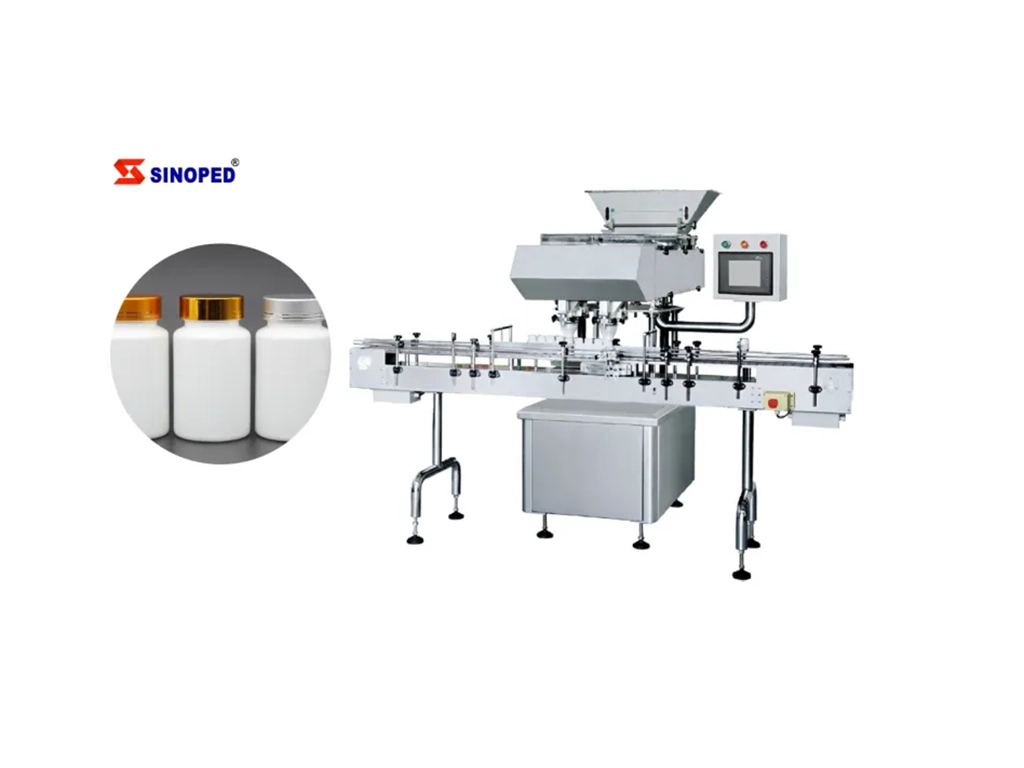
Automatic Tablet Counting Machine
推荐方案
GMP Modular Cleanroom Solution for a Pharmaceutical Factory in the United States
Automatic Capsule Filling Machine Project for Pharmaceutical Production in Vietnam

Softgel Encapsulation Machine Project for Pharmaceutical Laboratory Production in Iran