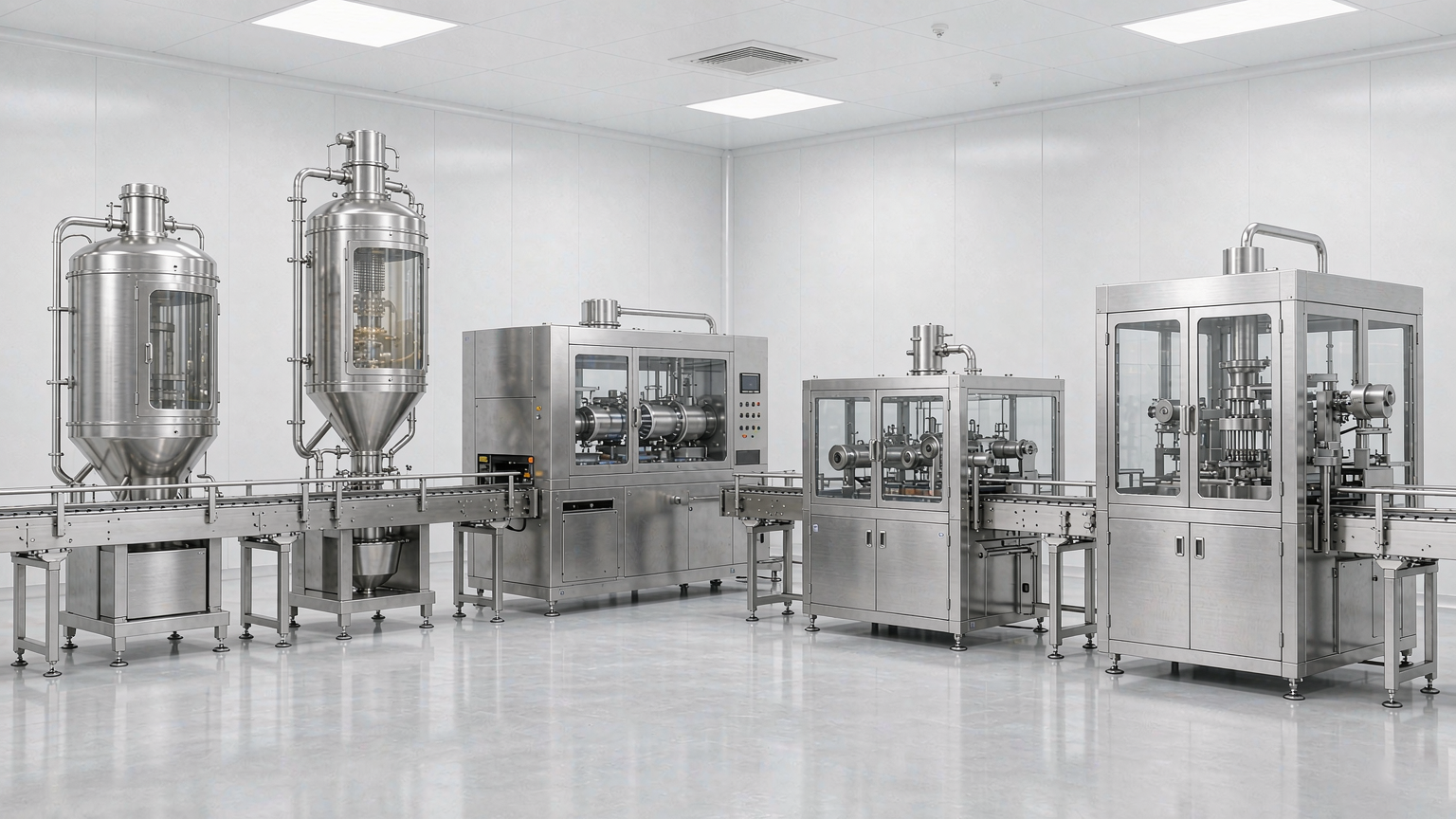
For a pharmaceutical or nutraceutical manufacturer, buying a machine is only one part of a production project. A tablet press, capsule filling machine, granulator, filling line, or packaging system must fit the product, facility, utilities, process sequence, documentation, and future operation. A well-planned FAT-to-SAT process helps the project team discover configuration or interface issues before they become expensive site delays.
1. Start with the user requirement and project boundary
The handover plan should begin with a controlled user requirement specification (URS) or equivalent project brief. It should describe the product type, dosage form, target capacity, batch size, material characteristics, process steps, packaging format, cleanroom or hygiene conditions, utilities, automation requirements, documentation, and intended market. The exact requirements vary by project, but they must be clear enough to evaluate equipment.
Define the boundary of supply. Does the supplier provide one machine, a linked line, a complete production area, cleanroom support, utilities, installation guidance, commissioning, or training? SINOPED describes support from equipment selection and production planning through installation assistance, commissioning, and technical services. Its FAQ also lists requirement analysis, equipment recommendation, technical confirmation, quotation, manufacturing, testing, delivery, and installation support as part of the ordering process. The buyer should convert this broad service description into a project responsibility matrix.
2. Freeze the approved equipment configuration
Before FAT, lock the equipment model, capacity, product-contact materials, control system, sensors, safety devices, change parts, tooling, format parts, utilities, and interface points. For a production line, identify upstream and downstream equipment and the transfer conditions between them. A machine can pass an isolated test and still fail to integrate if speeds, signals, elevations, or product flow are not aligned.
Use the latest approved layout, process flow, equipment list, electrical drawings, utility requirements, and software or control descriptions. Assign equipment tags and serial numbers. Record deviations from the original quotation and ensure they are approved. If the formula, container, capsule size, tablet tooling, or packaging format changes during the project, assess its impact on FAT and SAT before continuing.
SINOPED's product portfolio includes tablet presses, capsule filling machines, granulation and mixing equipment, powder filling, vial preparation lines, blister packaging, cartoning, counting, labeling, and other pharmaceutical machinery. The project team should evaluate the selected machine in relation to the complete process rather than treating a product-page capacity figure as a finished-line guarantee.
3. Design the FAT protocol around use conditions
The FAT protocol should state the test objective, equipment identity, test materials, operating conditions, utilities, acceptance criteria, instruments, data records, witnesses, and failure process. Use representative product or an approved substitute where feasible. The test material should reflect relevant properties such as powder flow, particle size, moisture, viscosity, capsule size, tablet format, vial, bottle, or package dimensions.
If a real product cannot be used at the factory, define the substitute and explain its limitations. A dry run may verify motion and safety but cannot prove dosing or product quality. A water trial may confirm liquid filling functions but not the behavior of a viscous or sterile formulation. Record which conclusions are demonstrated and which remain for site testing.
The protocol should identify safety interlocks, emergency stops, alarms, guarding, sensors, control-panel functions, recipe or parameter management, and operator interfaces where applicable. For automated equipment, verify the input and output signals needed for line integration. If the machine communicates with a line-control or data system, define the interface test and the records to be retained.
4. Conduct the FAT in logical stages
Begin with a document and visual review. Confirm the model, serial number, dimensions, materials, finish, guards, doors, access panels, product-contact parts, utilities, labels, and accessories. Check that the equipment matches the approved layout and drawings. For pharmaceutical equipment, inspect hygienic design features, cleanability, drainage or access where relevant, and the materials specified for product contact.
Next perform a no-load functional test. Check startup and shutdown, manual and automatic modes, movement, alarms, emergency stops, interlocks, sensor responses, lubrication or service points, and utility connections. Record the software version and key parameter settings. Confirm that operators can access the required controls without bypassing safety functions.
Then run a loaded or product-simulation test. Measure the attributes relevant to the equipment: filling accuracy, tablet weight or compression behavior, capsule dosing, granulation consistency, powder flow, blister or carton handling, vial filling, sealing, counting, labeling, or line coordination. Acceptance criteria should be agreed before the test. Capture actual settings, speed, run duration, rejects, stoppages, and samples.
5. Review equipment-specific evidence
For a tablet press, the FAT may include tooling, feeding, compression controls, output, weight or thickness checks, rejection, dust management, and format changeover, depending on the agreed scope. SINOPED describes its ZPT rotary tablet press as supporting several punch configurations and a stated production capacity range. Buyers should verify the exact tooling, formulation, tablet size, and test conditions behind the selected configuration.
For a capsule filling machine, review capsule size, powder or pellet behavior, dosing method, vacuum or negative-pressure functions where applicable, rejection, and change parts. SINOPED's product page describes rotary operation, negative-pressure filling, servo precision dosing, modular filling systems, and intelligent safety control for its NJP series. Confirm which features are included in the quoted model and which results are demonstrated during FAT.
For filling and packaging lines, test container or vial handling, dosing, stoppering, capping, sealing, counting, labeling, inspection, reject mechanisms, and line synchronization. A packaging machine's nominal speed is not the same as a guaranteed output for every product and package. Test the agreed format and record actual good output, rejects, changeover time, and interruptions.
6. Verify documentation and data integrity
The FAT should produce a controlled record set. Typical documents include the approved URS or requirement matrix, equipment specification, drawings, electrical and pneumatic diagrams, parts list, manuals, software or parameter backup, calibration or inspection records, test protocol, raw results, deviations, certificates, spare-parts list, and maintenance recommendations. The exact package depends on the project and applicable requirements.
Check that model, serial number, equipment tag, revision, and software version match across documents. If a drawing changes during FAT, update the document index and identify the change. Do not treat a signed test sheet as proof that every manual and drawing is final. The buyer should agree which documents are needed before shipment and which can be finalized during installation or commissioning.
For regulated manufacturing, the customer may require qualification, validation, data-integrity, or electronic-record review beyond a supplier's standard FAT. SINOPED states that it provides equipment documentation according to equipment type and project requirements and describes component inspection, production control, equipment testing, and delivery verification. The buyer should define the applicable quality and validation deliverables in the contract rather than assume that a general quality statement covers the complete project.
7. Plan delivery, installation, and utilities
After FAT approval, preserve the tested configuration during packing and transport. Record disassembly, preservation, lifting points, package identifiers, and installation instructions. The site should prepare floor space, access, foundations, cleanroom interfaces, electrical power, compressed air, vacuum, water, drainage, HVAC, process gases, and other utilities required by the selected equipment. The supplier and buyer should agree which party verifies each condition.
At arrival, inspect packages for damage and confirm serial numbers and accessories. Store the equipment according to the supplier's instructions. Installation should follow the approved layout, anchoring, leveling, connections, guarding, and cleanroom or hygiene requirements. Do not begin commissioning with unresolved damage or missing components unless the deviation is documented and approved.
SINOPED's public project pages describe support for turnkey factory work, cleanroom installation, pharmaceutical water treatment, production-line supply, and commissioning in international projects. These are project-level examples and should not be assumed to be included in every quotation. Ask for a written scope, site responsibility matrix, and schedule for the particular project.
8. Use commissioning to bridge FAT and SAT
Commissioning confirms that the installed equipment operates correctly in the actual facility. First perform an installation check: equipment identity, utilities, connections, guards, instruments, lubrication, cleanliness, software, and documentation. Then perform dry runs and utility checks. Next test the machine with the agreed materials and formats, adjusting parameters within approved limits.
The commissioning record should distinguish installation qualification activities from operational tests and performance tests where the customer's quality system uses those terms. Record parameter changes, alarms, stoppages, adjustments, samples, and open punch-list items. If a change is made from the FAT configuration, assess whether the test must be repeated or the drawing and software backup updated.
9. Define SAT and performance acceptance
SAT should verify the equipment in its installed location and intended process context. Acceptance may include output, dosing or filling accuracy, product quality, reject rates, safety functions, line coordination, cleaning or changeover, and operator usability. The duration and sampling should be sufficient for the project decision. Do not claim validated production from a short demonstration run unless the approved protocol supports that conclusion.
Set objective criteria before the SAT begins. Define how many runs or samples are required, how deviations are handled, and who signs the result. If performance is below target, determine whether the cause is equipment, material, utility, operator, process setting, or upstream/downstream integration. The investigation should preserve the original result and document corrective action.
10. Close training, spares, and after-sales support
Handover is incomplete if the operating team lacks training or maintenance information. Agree training for operators, maintenance personnel, quality staff, and automation users as appropriate. Provide manuals, spare-parts recommendations, preventive-maintenance schedules, troubleshooting guidance, and contact routes for technical support. Record attendance and any follow-up training.
SINOPED's FAQ describes ongoing technical support, operation guidance, maintenance assistance, commissioning support, and service communication. Buyers should define response expectations, remote or on-site support, warranty boundaries, spare-part lead times, and the language of documentation in the commercial agreement.
11. Use a single handover punch list
Maintain one punch list from FAT through SAT. Each item should state the equipment tag, issue, responsible party, due date, required evidence, and status. Separate document corrections, spare parts, training actions, software changes, mechanical rework, and performance deviations. The final acceptance certificate should reference the closed list or explicitly identify any approved residual items.
What buyers should ask SINOPED before approving a project
Ask for the proposed equipment list, URS response, project boundary, layout and utility requirements, FAT protocol, test materials, documentation index, installation and commissioning scope, SAT criteria, training plan, spare-parts list, after-sales support, change-control process, and final handover requirements. Provide product characteristics, production capacity, facility conditions, and process information early; SINOPED's FAQ identifies these as information used to customize equipment solutions.
SINOPED International (Liaoning) Co., Ltd. states that it was founded in 2017 and is based in Liaoyang, Liaoning, China. It describes pharmaceutical machinery manufacturing, production-line integration, cleanroom and engineering support, installation guidance, commissioning, and global project cooperation. These statements establish the company's stated service scope. The buyer should confirm the exact equipment model, project deliverables, qualification responsibilities, and acceptance criteria for the specific contract.
Does a successful FAT mean the pharmaceutical equipment is ready for commercial production?
No. FAT verifies the agreed factory tests. Installation, commissioning, site acceptance, process qualification, operator training, and applicable regulatory work remain to be completed.
What is the most important document to agree before FAT?
The approved requirement and acceptance matrix, supported by the equipment specification and FAT protocol, should define what will be tested, under which conditions, and how the result will be accepted.
Share
Recommended Courses
Hydrogen Fuel Cell Reefer Truck
Semi Automatic KN95 Mask Making Machine
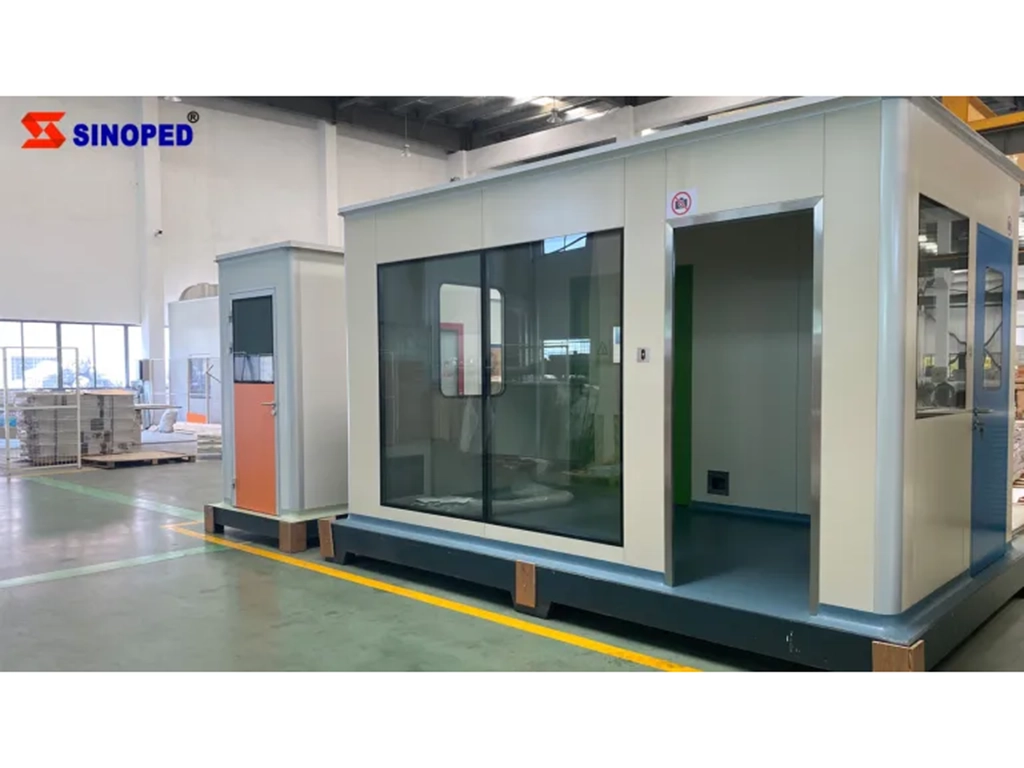
GMP Modular Clean Room System Manufacturer
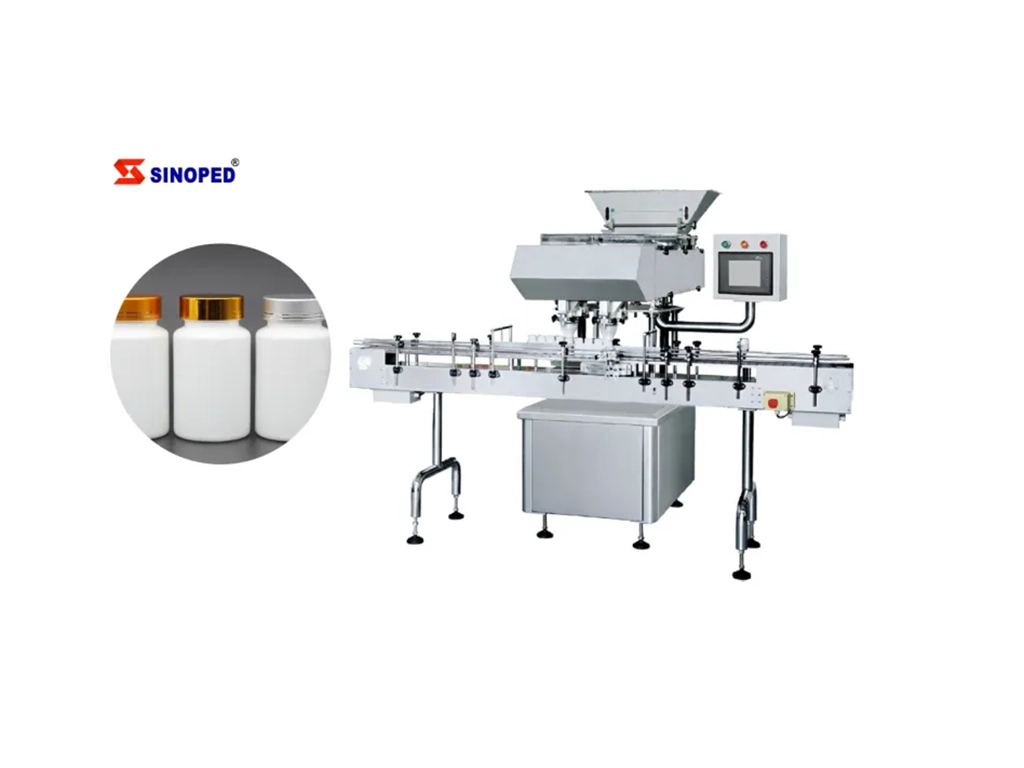
Automatic Tablet Counting Machine
Recommended Solutions
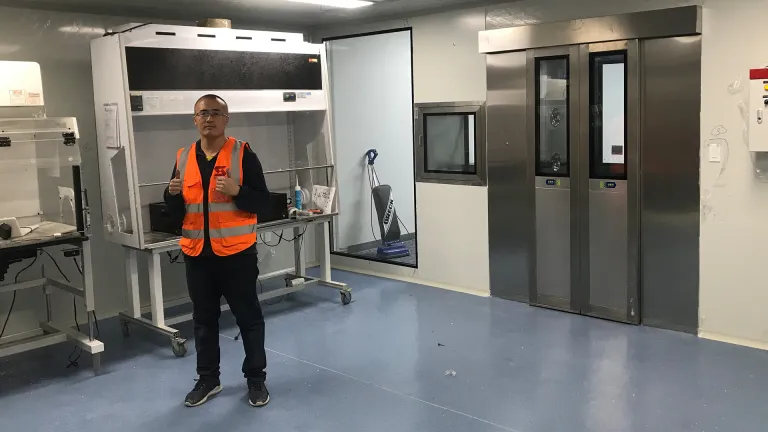
GMP Modular Cleanroom Solution for a Pharmaceutical Factory in the United States
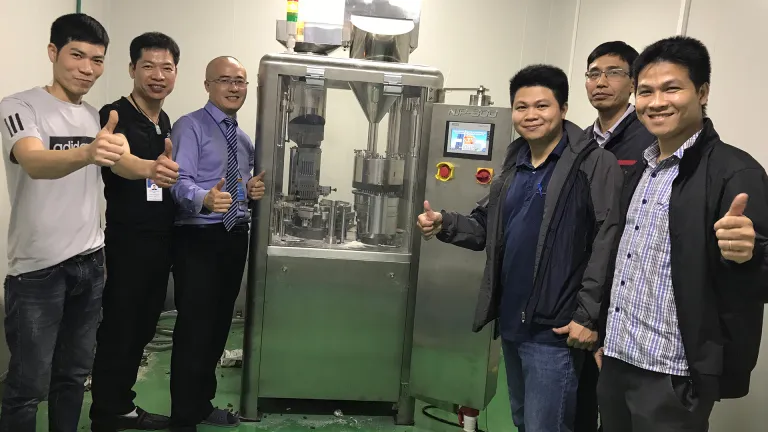
Automatic Capsule Filling Machine Project for Pharmaceutical Production in Vietnam

Softgel Encapsulation Machine Project for Pharmaceutical Laboratory Production in Iran